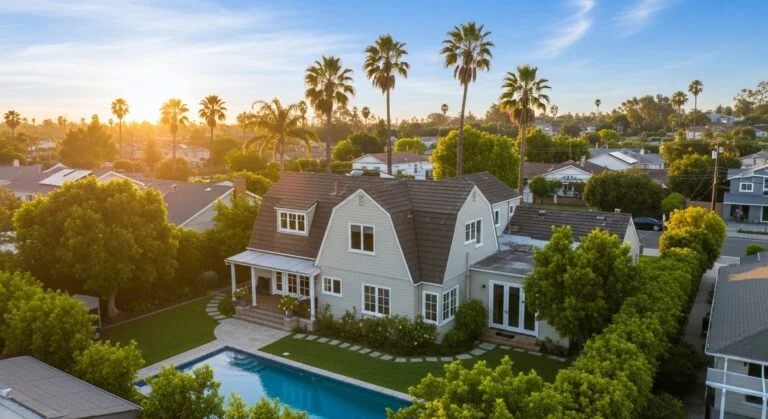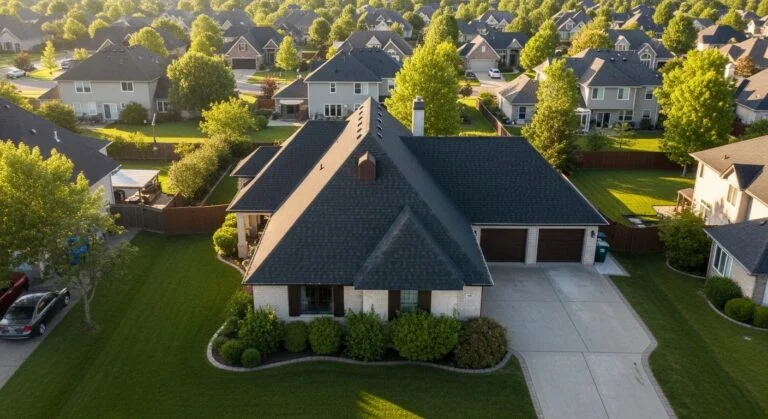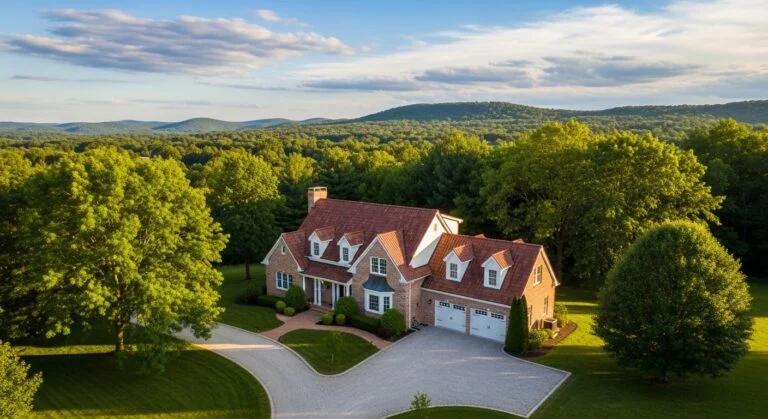


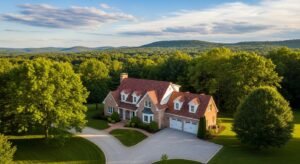
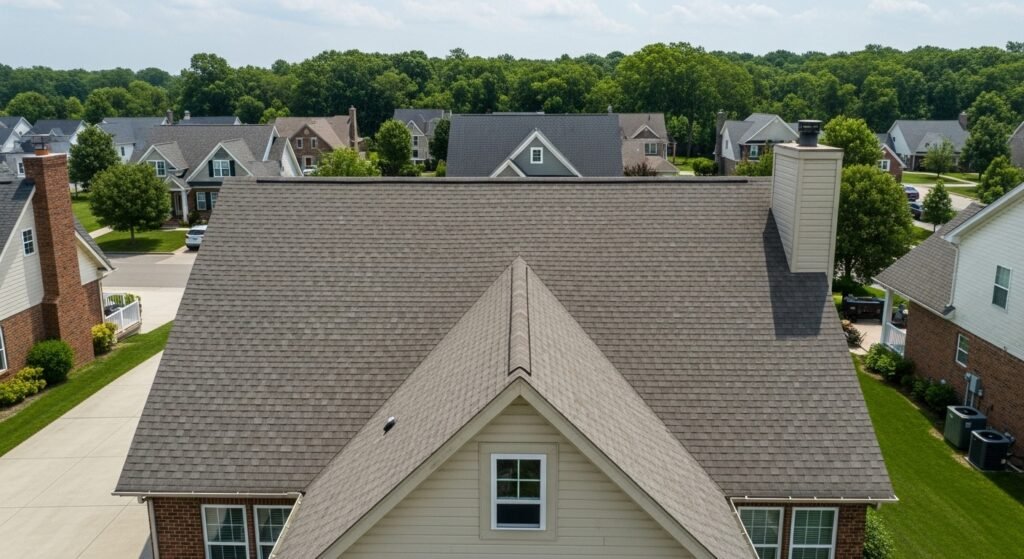
You’ve probably walked past a winged gable and not clocked it. It’s that slightly dramatic roof edge that sticks out wider than expected, almost like the house decided to stretch its shoulders a bit. A standard gable roof slopes down in two clean lines and meets at a ridge, sure. But a winged gable? The lower edges flare outward, extending past the wall plane, creating a kind of horizontal emphasis that feels protective, maybe even stubborn.
Architecturally speaking, a winged gable roof is a variation of the classic gable roof, where the eaves project outward more prominently at the base of the gable, forming what looks like “wings.” The term gets tossed around in residential design, especially when talking about Craftsman architecture, certain Colonial Revival homes, and some mid century suburban builds. It’s not a different roof type structurally. It’s a tweak. A personality trait.
And sometimes that tweak changes everything.
So how is it different from a regular gable roof?
You know the textbook gable roof. Two sloping planes meeting at the ridge. A triangle on each end. Clean geometry, almost mathematical in its simplicity. Builders love it because it sheds water efficiently, and it’s easier to frame compared to, say, a hip roof or something more temperamental.
With a winged gable, the eaves extend beyond the lower wall line more dramatically. In some designs, the roofline even flares slightly outward at the bottom, almost like a subtle kick. It gives the façade depth. That overhang is not just decorative, it often improves shading and water runoff control.
According to data from the US Census Bureau’s residential construction reports, gable style roofs remain one of the most common roof types in single family homes across the United States, especially in regions with heavy rainfall or snow. Builders on construction forums frequently mention that extended eaves help with moisture management, particularly in climates like the Pacific Northwest. And yes, winged variations show up in those discussions when homeowners want both function and flair.
It’s a small architectural decision, but you feel it when you stand in front of the house. The proportions shift. The silhouette gets bolder.
A little architectural history, because context matters
You can trace the winged gable’s popularity to early 20th century American residential architecture. Think Craftsman bungalows with wide eaves and exposed rafters. Or American Foursquare homes that wanted to look grounded but not dull. Those extended eaves were practical. They also looked intentional, which matters more than people admit.
In the 1910s and 1920s, pattern books circulated widely across the United States. Many of those house plans featured generous overhangs. Not always labeled “winged gables” in the text, but visually, that’s what you’re seeing. The roof edges project outward, giving shade to upper windows and protecting siding from rain. In pre air conditioning eras, that shading was crucial. The US Department of Energy still notes that proper roof overhang design can reduce solar heat gain significantly during summer months.
And then suburban expansion in the 1950s and 1960s happened. Developers liked variations that gave visual interest without increasing framing complexity too much. So the winged gable stuck around. It kind of never left, honestly.
Why you might actually want one
Let’s say you’re building or renovating. You’re staring at elevations on a screen, slightly bored. A plain gable can look… fine. But a winged gable roof design adds horizontal emphasis. It makes the house feel wider, even if the footprint hasn’t changed.
There’s practical upside too.
Extended eaves can:
- Improve water runoff management
- Reduce splash back on siding
- Provide shading for windows
- Protect entryways
Home improvement discussions often highlight how wider overhangs can reduce long term maintenance costs by limiting UV exposure and moisture damage to exterior materials. Some builders mention that increasing eave depth by even 12 to 18 inches can noticeably affect façade performance in rainy climates.
Is it dramatic? No. Is it quietly smart? Yes.
Also, and this is more subjective, it feels comforting. There’s something about a roof that reaches out a bit. Like it’s shielding the house. Maybe that sounds sentimental. But architecture does that to you.
Structural considerations, because it’s not just about looks
Now, let’s not romanticize too much. A winged gable still follows standard roof framing principles. You’re dealing with rafters or trusses, a ridge board, load paths that transfer weight to exterior walls. The extended eaves require proper support. That might mean longer rafters, lookouts, or cantilevered framing members.
Building codes, including the International Residential Code used widely across US jurisdictions, specify requirements for roof overhang support and wind uplift resistance. In high wind regions, like coastal areas, overhangs must be properly braced. Wind uplift pressure increases with projection depth. So if you’re extending those wings, you better be accounting for it structurally.
Engineers on construction forums often stress that improperly supported extended eaves can sag over time. Not instantly. Slowly. You’ll notice it one day when the shadow line looks slightly off. And then you can’t unsee it.
So yes, winged gables are charming. But they demand correct detailing.
Winged gable vs other roof styles
Let’s untangle this a bit.
A hip roof slopes down on all four sides. No vertical gable ends. It’s more resistant to wind, generally speaking, and common in hurricane prone areas.
A gable roof has two sloping sides and vertical triangular ends.
A winged gable roof is still fundamentally a gable. It just exaggerates the lower eave projection. It doesn’t change the basic roof geometry. It adjusts the edge condition.
There’s also the Dutch gable, which combines a hip roof with a small gable on top. Totally different animal. People mix these up, I’ve seen it happen in renovation threads where someone calls a winged gable a Dutch gable and then three comments later the correction war begins.
So if you’re using the term, use it correctly. Builders notice.
Does it cost more?
Short answer, usually a bit.
Longer answer, it depends on how far you push the projection. Extending rafters increases material use slightly. Labor might tick up. But compared to changing the entire roof form, the cost difference is modest.
Residential construction cost breakdowns show roofing materials and framing typically account for a significant portion of total build costs. However, minor modifications to overhang depth rarely shift the overall budget dramatically unless combined with custom fascia detailing or decorative brackets.
In some cases, those visible rafter tails, common in Craftsman inspired winged gables, add labor complexity. That’s where aesthetics and budget wrestle each other.
You might win. Or you might sigh and simplify.
A small thing that changes the whole face of a house
There’s something quietly expressive about a winged gable. It frames the façade. It casts deeper shadows. It makes the roofline feel intentional rather than default.
You could argue it’s just an extended eave. Technically, that’s not wrong. But architecture lives in those small deviations. Those tiny decisions where someone said, let’s push this out a bit more. Let’s give it weight.
If you’re analyzing residential roof design, studying gable roof variations, or planning a build and comparing roof overhang design, the winged gable is worth considering. It’s practical. It’s rooted in historical precedent. It performs well in many climates when detailed correctly.
And maybe, just maybe, it gives your house that slight, stubborn, protective stance. Like it’s bracing itself against the weather. Or the world. Hard to quantify that. But you feel it.
And sometimes that feeling is the whole point.

Jane Thompson is a seasoned journalist covering local and national news with a focus on community impact and civic issues. With over a decade of reporting experience, Jane brings clarity, depth, and factual insight to every story she writes. Outside of work she enjoys mentoring young writers and exploring the intersection of journalism and civic engagement.