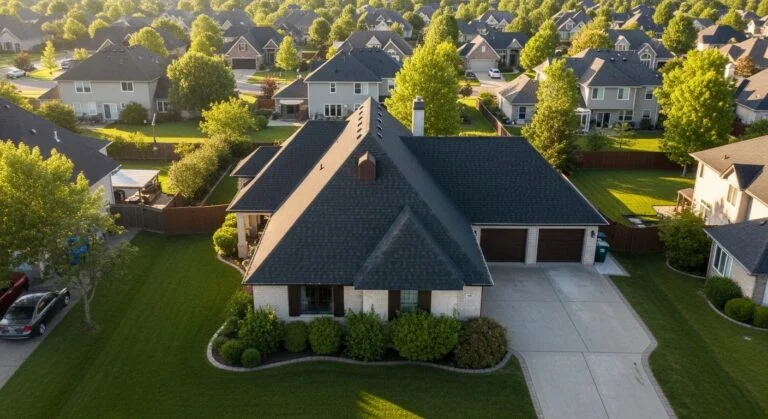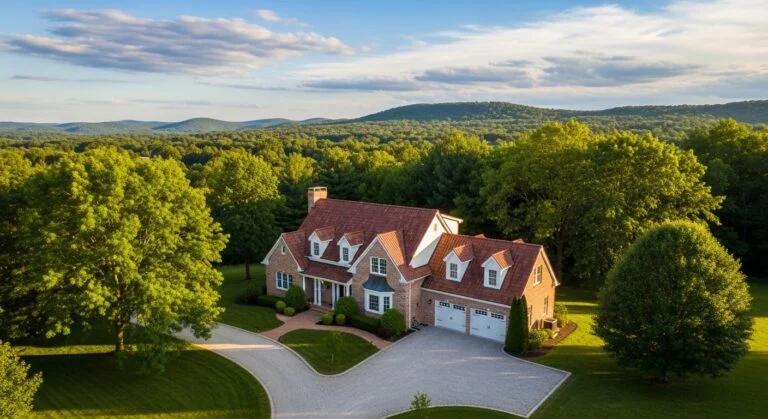




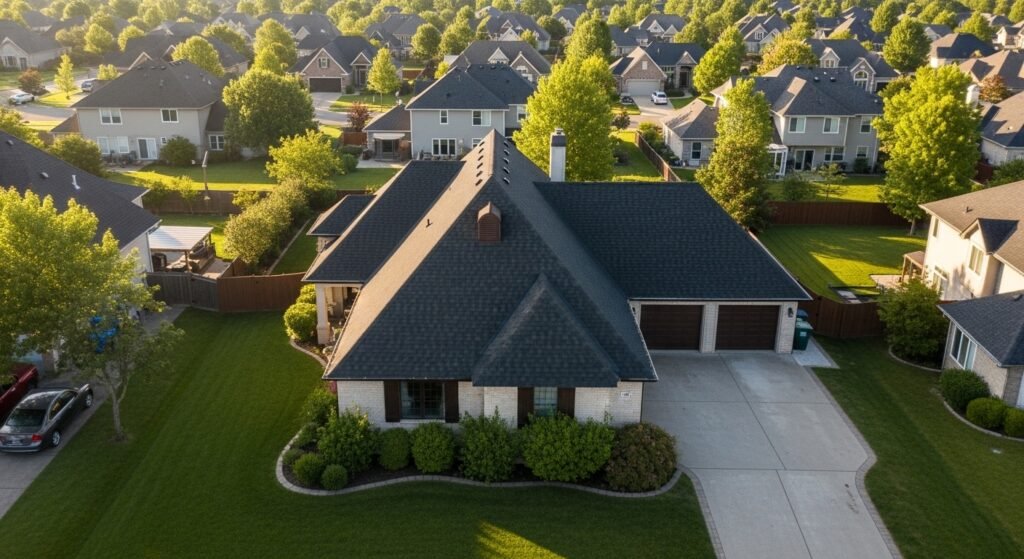
You have seen it a hundred times and maybe never named it. That pointed slice of wall tucked between two sloping roof edges, like a geometry lesson that escaped the classroom and landed on a house. That, right there, is a triangular gable. Simple shape. Big attitude.
A triangular gable is the vertical wall section formed when two sides of a pitched roof meet at a ridge. The roof slopes upward, they kiss at the top, and below that meeting line you get a triangle. Not a metaphorical one. An actual triangle, with straight edges and a proud little peak.
But that feels too neat. Roofs are rarely neat in real life. They creak, they settle, they get hammered by rain at 2 am when you’re trying to sleep.
Let’s slow down and pull it apart.
The Basic Anatomy of a Triangular Gable
You stand in front of a house with a gable roof. Two roof planes slope upward. They meet along a horizontal line called the ridge. Below that ridge, at the end of the building, the wall forms a triangle. That triangular section is the gable.
In most residential construction across the United States, the gable roof is one of the most common roof types. Census housing data has consistently shown pitched roofs dominating single family home construction, especially in suburban and rural areas. Flat roofs exist, sure. But the classic peaked silhouette wins by a mile in many regions because it sheds rain and snow efficiently.
The triangular gable is not the roof itself. That confuses people sometimes. It’s the wall portion under the roof slope. It can be framed with studs, sheathed with plywood or OSB, then covered with siding, brick veneer, stucco, or even decorative wood trim. Structurally it supports the roof edge framing and closes off the attic space. No drama. Just physics and gravity doing their thing.
Why the Triangle Shape Actually Matters
Triangles are bossy shapes. Engineers love them because they don’t distort easily. When you push on a rectangle, it can lean and skew. Push on a triangle, and it fights back. The geometry locks it in.
In roof framing, triangular forms appear naturally when rafters meet at a ridge. The gable end reflects that structural logic. It distributes loads down to the foundation through studs and wall plates. You are not just looking at decoration. You’re looking at a structural consequence of how pitched roofs work.
In regions with heavy snow loads, like parts of the northern United States, pitched roofs reduce accumulation compared to flat systems. Snow slides off more easily. That simple peak you ignore while driving by houses is quietly preventing thousands of pounds of snow from sitting on a flat surface.
And yes, sometimes the gable wall can become a weak point in high wind zones. Hurricane prone areas often require reinforced gable end bracing because strong winds can push against that triangular wall like a sail. After major storms, building code updates have frequently emphasized strengthening gable end connections. You don’t see that from the street. But it matters.
Types of Triangular Gables You Probably Noticed Without Realizing
You think a triangular gable is just one shape. It is. But it also isn’t. There are variations that shift the vibe completely.
A front gable faces the street directly. Think classic farmhouse or a child’s drawing of a house. Square body, triangle on top, chimney puffing imaginary smoke.
A cross gable forms when two gable roof sections intersect at right angles. This creates multiple triangular gables on different sides of the house. Suburban homes from the 1980s and 1990s love this look. It adds visual complexity, sometimes too much if you ask me.
A Dutch gable combines a hip roof with a small gable section at the top. It looks like someone changed their mind halfway through building and said, let’s add a little peak up there for fun. It is not random though. It can increase attic space and improve ventilation.
Many triangular gables include a gable vent, a louvered opening that allows hot air to escape from the attic. Proper attic ventilation helps regulate temperature and moisture. Building science research has repeatedly shown that poorly ventilated attics contribute to ice dams in cold climates and heat buildup in hot regions. That small vent inside a triangle is doing quiet climate control work year round.
A Short History That Wandered Through Time
Triangular gables show up in ancient architecture. Greek temples featured pediments, which are basically classical triangular gables framed with columns. The Parthenon is a famous example, with a triangular pediment filled with sculptural relief. The shape became symbolic of symmetry and order.
Fast forward to medieval Europe, and steeply pitched gables were common in northern regions because heavy snow demanded steep roof slopes. Timber framing methods also naturally produced gable ends. Materials change. Shape remains.
In American residential architecture, styles like Colonial Revival, Cape Cod, and Craftsman frequently use triangular gables. The Craftsman style in particular often adds decorative brackets and exposed rafter tails under the gable eaves. That triangle becomes expressive, not just structural.
It’s strange how a simple geometric form travels from temples to tract housing, carrying centuries of habit with it.
Materials and Finishes Inside a Triangular Gable
You can dress up a triangular gable or keep it plain. Vinyl siding is common in modern suburban builds. Brick veneer wraps around the triangle in masonry homes. Stucco smooths it into a clean surface in Mediterranean inspired designs.
Sometimes homeowners install decorative elements like shingles with fish scale patterns, or wood trim in contrasting colors. Gable pediments with molding details are popular in traditional homes. It’s like giving the roof a little hat with personality.
Structurally, the gable wall typically contains vertical studs spaced at standard intervals, often 16 or 24 inches on center in wood frame construction. Sheathing adds rigidity. The roof rafters tie into the top plate of that wall. In high wind areas, metal connectors and hurricane straps may secure the framing more tightly. You don’t see those metal ties once the drywall and siding go up, but they’re there.
How a Triangular Gable Affects Attic Space
The slope of the roof defines the interior attic volume. A steeper pitch creates more vertical clearance near the center. That triangular outline you see outside directly influences whether you can stand up in the attic or crouch like a raccoon.
In some homes, gable ends include windows. These are called gable windows. They add natural light and sometimes ventilation. In converted attic spaces, especially in older houses, gable windows can make a huge difference in livability.
Roof pitch is often expressed as a ratio like 6 in 12 or 8 in 12, meaning the roof rises 6 inches for every 12 inches of horizontal run. Steeper pitches produce taller triangular gables. That geometry is not just aesthetic. It defines structural loads, material quantities, and even insurance considerations in certain storm zones.
Common Problems with Triangular Gables
Not everything about a triangular gable is charming. Gable end walls can be vulnerable to wind uplift if not properly braced. In hurricane prone regions, building code inspections often focus on reinforcing these areas with additional bracing and stronger connections.
Water intrusion can also occur where roof planes meet the gable wall if flashing is poorly installed. Flashing directs water away from joints. If it fails, moisture sneaks in, and then you get rot. Wood does not forgive repeated soaking.
Improperly ventilated gable ends can contribute to attic moisture buildup. That leads to mold growth, which nobody invited. So while the triangular gable looks calm from the curb, there is always some engineering negotiation happening behind it.
So What Is a Triangular Gable, Really
It’s a wall. It’s a shape. It’s a structural outcome of a pitched roof. It’s also a design feature that has been repeated for thousands of years across cultures.
You glance at it and move on. Builders obsess over it during framing. Architects sketch it almost absentmindedly. And homeowners hang holiday lights from it without thinking twice.
A triangular gable is the honest geometry of a roof made visible. No mystery. No secret handshake. Just two slopes meeting, and a triangle left behind, holding space between sky and ceiling. If that sounds poetic, maybe it is. Or maybe it’s just carpentry doing what carpentry does, quietly, reliably, year after year.

Jane Thompson is a seasoned journalist covering local and national news with a focus on community impact and civic issues. With over a decade of reporting experience, Jane brings clarity, depth, and factual insight to every story she writes. Outside of work she enjoys mentoring young writers and exploring the intersection of journalism and civic engagement.