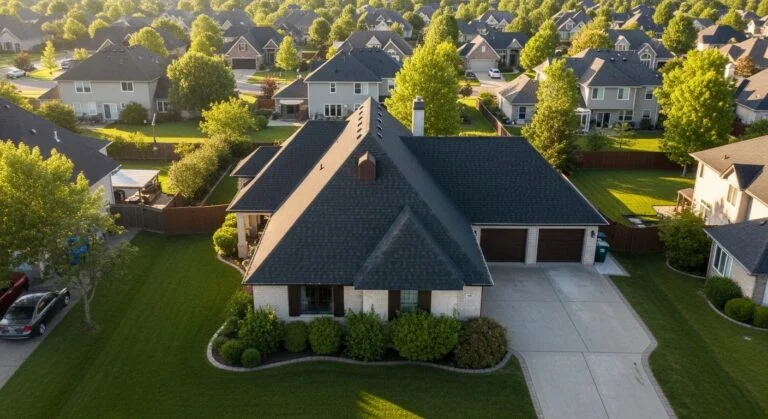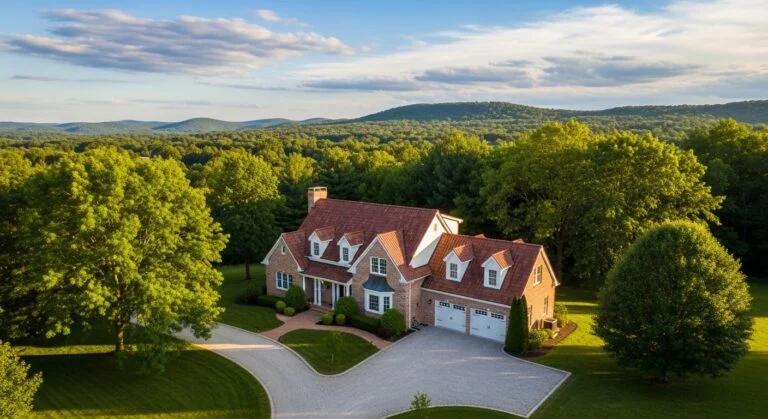




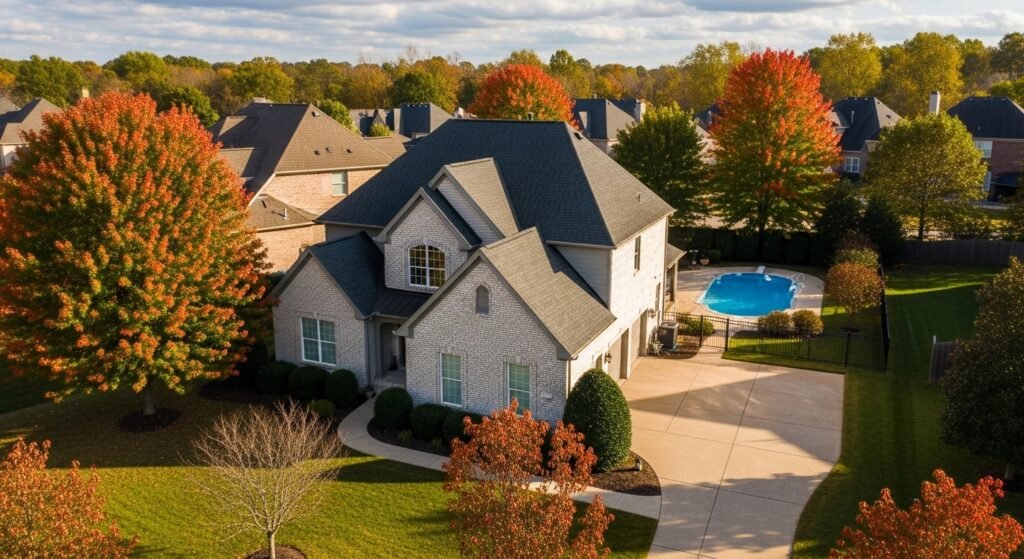
You know that roof shape where two ridges crash into each other like stubborn goats on a hillside. That, roughly speaking, is a cross-gable roof. Not fancy wording, just geometry with attitude.
A cross-gable roof forms when two or more gable roof sections intersect at right angles. The ridgelines cross. Valleys are created where the slopes meet. And suddenly the house doesn’t look like a plain shoebox anymore. It looks layered. A little dramatic. Slightly complicated. Sometimes too complicated, but we’ll get to that.
I used to think it was just “a big roof with bumps.” It isn’t. It’s deliberate. It’s structural math dressed up as architecture.
So What Exactly Is a Cross-Gable Roof
Start with a standard gable roof. Two sloping sides. A ridge at the top. A triangle on each end. Simple, dependable, almost boring in its honesty.
Now take another gable roof and push it through the first one at a 90 degree angle. Let them intersect. Where they cross, valleys form. Those valleys are not decorative. They channel water, and sometimes trouble, depending on installation quality.
That intersection point is the defining trait. Without that cross, you just have a regular gable. With it, you’ve stepped into more complexity. And complexity, well, it can be beautiful or a headache depending on who built it.
A Quick Visual Breakdown
Look closely at the valleys in those images. Those diagonal seams. That’s where water runs fast during heavy rain. Contractors obsess over those lines for a reason.
Where You Usually See Cross-Gable Roofs
You’ll notice them on Colonial homes. On Cape Cod houses. On many Craftsman-style builds. Especially in suburban neighborhoods built between the 1970s and early 2000s.
In the United States, gable-style roofs in general dominate residential construction. Surveys from housing data over the past decade regularly show pitched roofs, including gable and cross-gable variations, making up a majority of detached single-family homes. It makes sense. They handle snow loads better than flat roofs. They shed rain naturally. They’re familiar.
In colder climates, pitched roofs matter. According to structural engineering guidelines used in building codes, snow loads in northern states can exceed 30 pounds per square foot. In some mountain regions, much more. A cross-gable roof distributes that weight across multiple slopes, which can help, but it also means more framing complexity.
I once watched a contractor stand in the rain staring at a valley joint muttering “this is where leaks start.” He wasn’t wrong.
Anatomy of a Cross-Gable Roof
Let’s break it down without sounding like a textbook.
You have:
• Two or more gable roof sections
• Intersecting ridgelines
• Roof valleys where slopes meet
• Separate roof planes that often cover different sections of the house
Often one gable covers the main living area. Another covers a garage. Maybe another for a porch. The roof reflects the interior layout. It’s like the outside silhouette is whispering the floor plan.
Structurally, framing becomes more complex. Valley rafters must carry additional load. Flashing must be precise. If that flashing fails, you get leaks. And leaks, honestly, don’t care how pretty your roof looks.
Why Homeowners Like Cross-Gable Roofs
You get visual interest. That’s the simple truth.
Instead of one long roofline, you get dimension. Depth. Angles. Shadows. Houses with cross-gable roofs often look larger than they actually are. Architects use this to break up mass and reduce that blocky feel.
There’s also practical upside. Because different wings of the house can have their own gable section, you gain flexibility in layout. Want a taller ceiling in the main living area? Add a perpendicular gable. Need a covered entry with drama? Insert another gable.
You also improve attic ventilation potential. Gable ends allow for vents. Good airflow matters more than most homeowners realize. Poor ventilation contributes to moisture buildup and can shorten roof lifespan. Roofing manufacturers often cite 20 to 30 years as the lifespan for asphalt shingles under proper ventilation. Poor airflow can reduce that expectancy noticeably.
The Not-So-Pretty Side of It
More valleys means more potential leak points. That’s the trade-off.
Roof valleys handle a high volume of runoff. During heavy rainfall, water concentrates in those channels. If flashing is poorly installed or shingles are misaligned, moisture intrusion begins quietly. Sometimes it takes years before you notice stains on drywall.
Also, installation costs rise. A simple gable roof is straightforward to frame and shingle. A cross-gable design requires additional labor hours. More cuts. More measurements. More potential mistakes.
Roofing contractors often price by square footage plus complexity. The more intersections and valleys, the higher the labor cost. You pay for geometry, basically.
And snow accumulation can create uneven loads in some designs. Engineers account for this during structural planning, but retrofits or DIY additions sometimes overlook it. That’s when problems creep in.
Cross-Gable vs Simple Gable Roof
You might wonder if the difference really matters. It does.
A simple gable roof has one ridge line. Two slopes. Clean. Efficient. Less material waste. Fewer weak points.
A cross-gable roof introduces architectural variation. It increases curb appeal. It can improve spatial distribution. But it adds complexity in both framing and maintenance.
It’s a bit like adding extra lanes to a highway. Traffic flows differently, but the engineering becomes more demanding.
Framing Considerations
Roof framing for cross-gable structures requires valley rafters, jack rafters, and careful load transfer. Valley rafters typically support greater weight because they receive load from two roof planes. That means lumber sizing matters. Fastener placement matters. Everything matters.
In modern construction, engineered trusses are often used instead of traditional stick framing. Trusses can be pre-designed to accommodate cross-gable intersections, improving structural consistency. But even then, installation precision is key.
One slightly misaligned truss, and the roof plane can warp. You won’t see it from the street, maybe. But water will find it.
Energy and Weather Performance
Cross-gable roofs perform well in rainy climates due to steep slopes that shed water efficiently. However, because of multiple roof planes, there’s increased surface area. More surface area means potentially more heat gain in warm climates unless insulation is well designed.
In areas with high wind exposure, gable ends can be vulnerable. Building codes in hurricane-prone regions require reinforced connections at gable ends because uplift forces can be significant. Roof failures during major storms often start at poorly braced gable ends.
That’s not meant to scare you. Just saying. Design choices ripple outward.
Maintenance Reality
If you own a house with a cross-gable roof, pay attention to valleys. Clear debris regularly. Leaves accumulate there faster. Water pools if drainage is obstructed.
Inspect flashing every few years. Especially after storms. Small cracks widen over time.
Roof inspections, according to home maintenance studies, can extend roof lifespan significantly. Preventive maintenance costs far less than interior water damage repairs. That sounds obvious, yet many homeowners wait until stains appear.
Is a Cross-Gable Roof Worth It
If you care about architectural character, yes. If you value simplicity above all else, maybe not.
You’re trading structural elegance for visual richness. You’re accepting complexity in exchange for depth.
Some people want clean lines. Others want a roof that feels layered, almost storytelling in shape. Neither is wrong.
I tend to like cross-gable designs when they match the scale of the house. Oversized intersections on small homes look forced. Balanced proportions matter.
But then again, architecture is subjective. And roofs, oddly enough, shape how you feel about a home before you ever step inside.
So next time you drive past a house with multiple ridges intersecting like puzzle pieces, you’ll know. That’s a cross-gable roof. Not just decoration. Not random angles. It’s structure meeting design, sometimes gracefully, sometimes with a bit of drama.
And honestly, roofs with a little drama aren’t the worst thing in the world.

Marcus Lee is the go-to voice for technical renovation know-how and tool expertise. With professional experience in carpentry and project management, Marcus breaks down build techniques, safety tips, and tool reviews so DIYers and pros alike can execute projects with precision. When he’s not at the workbench, he’s mentoring aspiring builders and cataloging his favorite power tools.