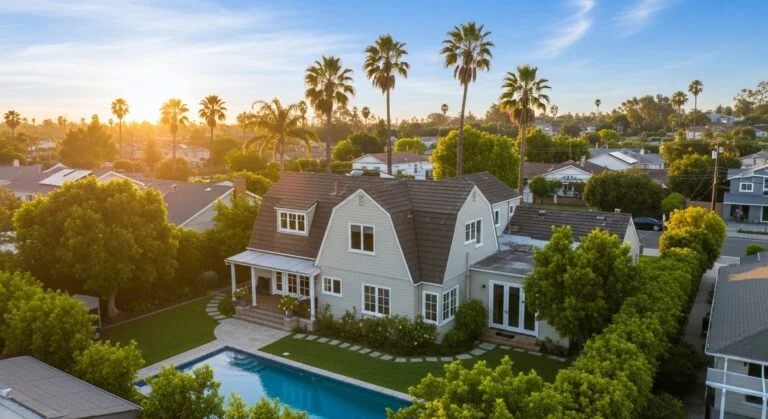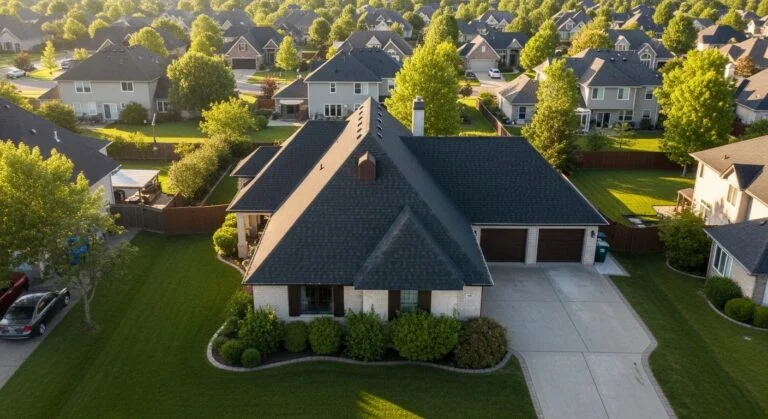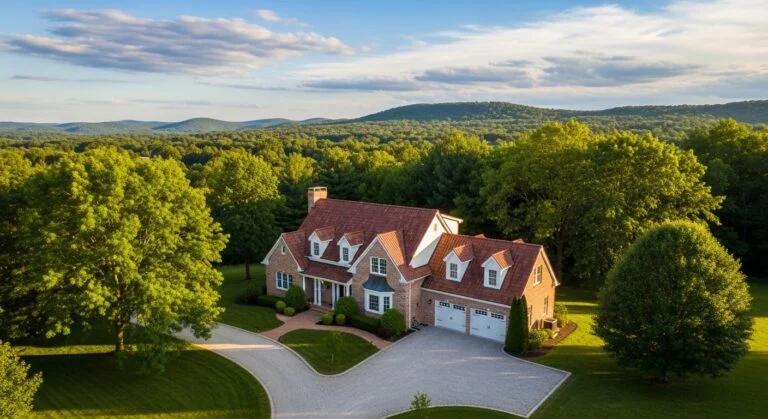


You have probably seen a California gable and not realized it had a name. That triangular punch at the end of a roof, kind of dramatic, almost showing off a little. It is basically a gable roof that extends beyond the ridge line, with barge rafters and fascia running out past the main roof surface, creating that boxed or framed look at the peak. Simple explanation, yes. But it never feels simple when you stand under one and squint up at the lines.
A regular gable roof just slopes down on two sides and meets at a ridge. A California gable roof detail pushes the rake edges outward so the fascia boards and trim create a crisp triangle that floats slightly forward. It’s decorative, but not only decorative. And that’s where it gets interesting, or at least mildly obsessive if you are into roof geometry like some of us accidentally become.
The Basic Anatomy of a California Gable
You are looking at three main things when you study a California gable. The ridge. The rake. The overhang.
The rake overhang extends past the wall line, often more pronounced than a standard gable. The barge rafters run along that sloping edge, and fascia boards close it off so it looks intentional, not like someone forgot to trim something. There’s a framed triangle effect at the peak, almost like the roof is wearing eyeliner. That sounds ridiculous, but once you see it, you can’t unsee it.
In many cases, the overhang depth ranges from 12 to 24 inches, depending on climate and architectural style. In coastal areas, especially parts of California, extended overhangs help shield walls from sun and seasonal rain. It’s not just for style. Sun control matters. According to energy studies from the U.S. Department of Energy, roof overhangs can reduce solar heat gain through windows by a measurable margin in warm climates. Not magic. Just physics and shade doing their quiet job.
Why It’s Called “California” in the First Place
No one held a naming ceremony, at least none that I was invited to. The term California gable became common in West Coast residential construction, especially in mid 20th century homes. Think ranch houses, early suburban builds, low slung silhouettes.
California has about 16 million housing units, and a significant percentage of detached single family homes use some variation of the gable roof. The extended rake detail showed up frequently in post war subdivisions where visual variety mattered but budgets were tight. Builders could tweak the trim detail without redesigning the entire roof structure. Cheap adjustment. Big visual payoff.
It also fits the climate logic. In Mediterranean climates like much of coastal California, summer sun angles are high, and extended eaves help shade walls. In hotter inland zones, the extra projection gives a bit more protection to siding. You are not building a fortress, but you are buying yourself some comfort.
California Gable vs Standard Gable
If you stand two houses next to each other, one with a standard gable and one with a California gable, the difference feels subtle at first. Then your eye catches that extended triangle and you go, oh. There it is.
A standard gable ends clean at the wall plane. The rake trim aligns more tightly with the structure. The California version extends outward, forming a stronger outline. It casts a sharper shadow line too, which architects sometimes chase like it’s gold.
From a structural perspective, the load path is similar. Rafters still transfer weight to walls. The extended rake is typically supported by outlookers or ladder framing attached to the last common rafter. It’s not radically different engineering, but it requires attention. You can’t just bolt on extra wood and hope gravity cooperates.
And yes, poor detailing can lead to problems. Water intrusion at the rake edge is a common failure point in badly executed gables. According to insurance industry data, roof related claims make up roughly 30 percent of homeowner insurance losses annually in the United States. Not all of that is gables obviously, but edges and flashing mistakes show up again and again in claim reports.
Where You Usually See a California Gable
You’ll spot California gable roofs on:
- Ranch style homes
- Craftsman influenced houses
- Some Spanish Colonial Revival adaptations
- Suburban tract housing from the 1950s through the 1980s
It pairs well with stucco exteriors, horizontal lap siding, even board and batten. Sometimes the gable face includes a vent, maybe a small louvered opening for attic ventilation. Attic ventilation, by the way, matters more than people think. The Federal Housing Administration has long recommended a ratio of 1 square foot of net free ventilation area for every 150 square feet of attic floor space, unless vapor barriers allow adjustment to 1:300. That triangular gable end becomes a convenient place to tuck in vents.
I once stood in a neighborhood where every third house had some version of it. It almost felt like the roofline was waving at you. Not aggressively. Just, hey, I’m here.
Structural and Performance Considerations
You might assume it’s all aesthetic fluff, but roof geometry affects wind loads. In hurricane prone regions, gable ends can be vulnerable to uplift forces. The Insurance Institute for Business and Home Safety has documented that improperly braced gable ends can fail under high wind pressure. In places like Florida, updated building codes require stronger bracing at gable ends compared to older construction.
Now, a California gable is not inherently weaker. But that extended rake means more surface area exposed to wind. So fastening schedules, sheathing thickness, and bracing detail actually matter. It’s not just carpentry vibes and pretty trim.
Thermally, the extended overhang can reduce direct sun exposure on upper wall sections. That may slightly lower cooling loads. The U.S. Energy Information Administration notes that air conditioning accounts for about 12 percent of residential electricity use nationwide, and much higher in warm states. Any shading strategy, even modest, contributes to overall efficiency.
Is a California Gable Expensive to Build?
Compared to a standard gable roof, the cost difference is not dramatic. You’re adding framing for the rake extension, additional fascia, and finish trim. On a typical single family home, that might translate to a few hundred to a couple thousand dollars depending on size and material. Not small change, but not outrageous either.
The bigger cost comes if detailing is sloppy and you get water damage later. Rot at the rake edge. Paint peeling. Fascia warping. Then you’re paying twice, which no one enjoys.
Still, homeowners often like the defined outline. It gives the house a finished look. A little attitude at the roofline. And sometimes that is enough reason.
So, What Is a California Gable Really?
It’s a variation on a gable roof where the rake overhang extends beyond the wall plane, framed and trimmed to emphasize the triangular end. It’s architectural punctuation. A roof saying something slightly louder than usual.
You might call it cosmetic. You might call it climate responsive. You might even shrug and say it’s just wood arranged at an angle. All true, sort of. But architecture lives in these small adjustments. A few inches of projection changes shadow, changes proportion, changes how the house sits against the sky.
And that’s the thing about a California gable. It looks simple until you stare at it long enough. Then it becomes geometry, weather strategy, construction detail, neighborhood identity, and maybe a quiet flex by the builder who wanted that roofline to feel a bit sharper.
You probably won’t think about it every day. But next time you see that extended triangle at the end of a roof, you’ll know it has a name. And now you can’t unknow it.

Natalie Brooks champions sustainable remodeling and smart home upgrades that boost comfort and efficiency. She writes about eco-friendly materials, energy-saving remodel ideas, and integrating modern technology into traditional spaces. Natalie also consults with homeowners on greener renovation decisions and enjoys testing new smart home gadgets.