



You keep seeing the term Dutch gable roof and maybe you nod like you know it, but do you actually? It sounds fancy, slightly European, maybe something with tulips nearby. But it’s really just a roof that couldn’t decide what it wanted to be when it grew up.
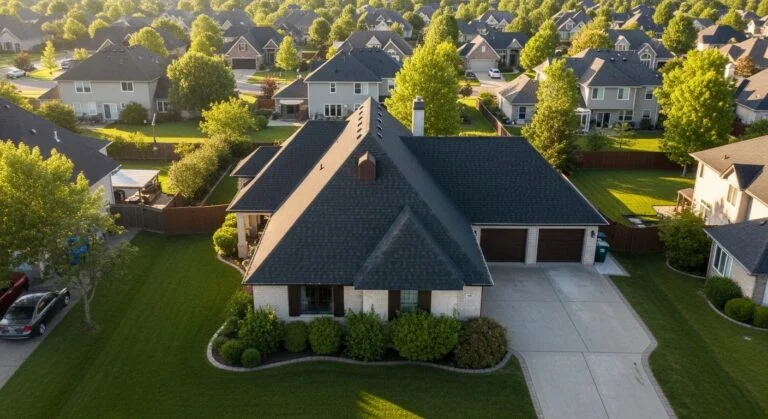
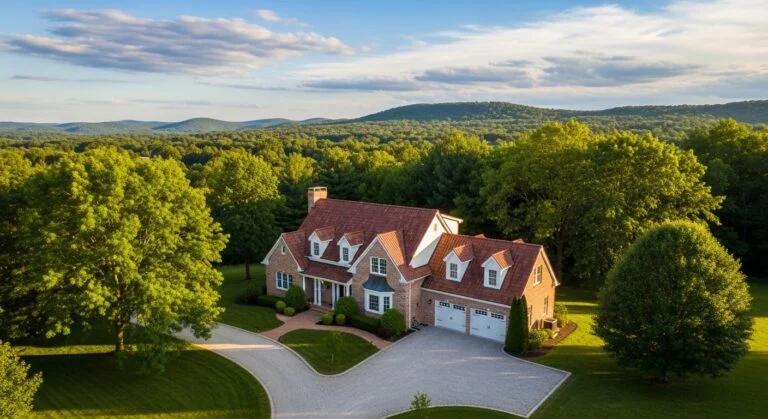
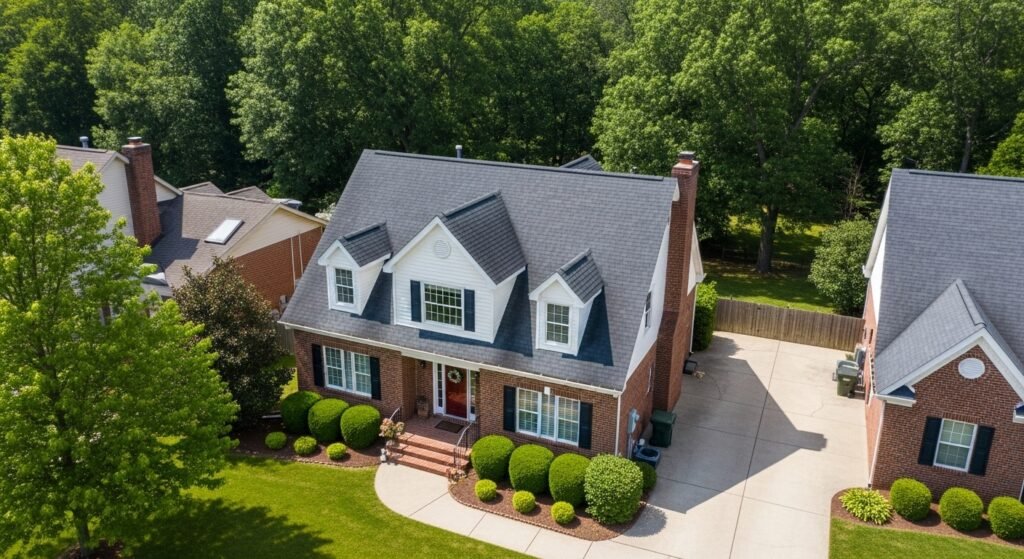
So here’s the plain thing. A Dutch gable roof is basically a hip roof with a gable roof sitting on top of it. Yes, both. It’s like someone stacked roof styles and said, that’ll do. The lower portion slopes on all four sides like a traditional hip roof, and then right up near the ridge, there’s a small vertical gable popping out. Not shy at all.
You get the stability of a hip roof design, but you also steal the vertical face of a gable end. It’s architectural multitasking. Slightly dramatic, slightly practical.
What Makes a Dutch Gable Roof Different?
Let’s rewind for a second. A gable roof is the classic triangle shape. Two sloping sides meeting at a ridge, with that vertical triangular wall at the end. You’ve drawn it since kindergarten probably.
A hip roof, though, slopes on all four sides. No vertical ends. It’s neat, symmetrical, and generally more wind-resistant. According to the Federal Emergency Management Agency, hip roofs tend to perform better in high-wind events because wind pressure distributes more evenly across the slopes. That’s not poetry, that’s physics being boring and useful.
Now smash them together. That’s the Dutch gable roof style.
You still have four sloping sides at the base, but then a smaller gable rises from the top. It’s almost like the roof grew a second opinion halfway through construction.
Sometimes this upper gable holds a window. Sometimes just decoration. Sometimes ventilation. Sometimes, honestly, just because it looks good and the homeowner wanted “something extra” and wouldn’t let it go.
A Bit of History Because Roofs Have Stories Too
The name “Dutch” hints at its origins. This roof form appeared frequently in Dutch Colonial architecture, especially in the 17th and 18th centuries. In the United States, you see variations in Dutch Colonial Revival homes from the early 1900s. Think East Coast, clapboard siding, a porch with columns, and that little upper gable acting proud.
In some parts of Australia and South Africa, the Dutch gable roof became popular for practical reasons. It allowed extra attic space without committing to a full second story. Space is money, and architects have always known that.
Census housing data over the decades shows that pitched roofs, including hip and gable combinations, remain dominant in residential construction across the United States. Asphalt shingle roofing still covers roughly three quarters of American homes. So yes, when you’re talking about a Dutch gable roof, you’re usually talking about shingles sitting on layered geometry that looks simple until you try to frame it.
Structure and Framing, Where It Gets Slightly Complicated
Here’s where things get mildly technical, but stay with me.
A Dutch gable roof structure includes:
- Hip rafters forming the lower sloping sides
- A ridge board at the top
- Additional framing to support the upper gable section
That upper gable doesn’t just magically perch there. It requires extra bracing and careful load distribution. If you mess this up, well, gravity will have opinions.
Because the design adds complexity, framing labor costs can be higher than a standard hip or gable roof. Contractors often estimate roof framing as a percentage of total construction cost, and more complex rooflines can push that upward. Even a few extra framing hours adds up quickly.
And here’s something people forget. More joints and intersections mean more potential leak points. Flashing details become critical. If your contractor shrugs about flashing, you should probably not shrug back.
Why Would You Choose a Dutch Gable Roof?
You want attic space but also wind stability. That’s the short answer.
A pure hip roof reduces attic volume because all sides slope downward. But add that small gable on top and suddenly you’ve created more usable interior space. Maybe you get better ventilation. Maybe you install a window and let light in. Maybe you turn it into a reading nook and pretend you’re in a period drama.
The combination also improves curb appeal. Real estate data often shows that architectural details increase perceived home value, even if appraisers don’t always quantify it dramatically. Buyers respond emotionally to rooflines. It sounds silly, but stand across the street and squint. The roof is half the house’s personality.
And yes, in hurricane-prone areas, hip roofs are often recommended because of wind resistance. The Dutch gable preserves much of that benefit while adding vertical design interest. It’s compromise, but in a charming way.
Pros and Cons, Because Nothing Is Perfect
You get structural stability from the hip portion. That’s good. You get additional attic headroom from the gable portion. Also good. You get aesthetic variation. Definitely good if you’re bored of rectangles.
But complexity means higher cost. And complexity also means more maintenance over decades. Roofing contractors report that valleys and intersecting planes are common leak zones. More geometry equals more flashing equals more chances for something to go wrong if installation is sloppy.
Still, many homeowners accept that trade-off. I’ve seen houses where the Dutch gable makes the entire façade look taller, more balanced. Without it, the house looked slightly squashed, like it needed a haircut.
Materials and Modern Adaptations
You can build a Dutch gable roof with asphalt shingles, clay tiles, metal roofing panels, even slate if you have the budget and patience. The shape doesn’t demand a specific material, though heavier materials like tile require stronger structural support.
Metal roofing has gained popularity in recent years, especially in coastal regions, due to durability and wind resistance. Industry reports show metal roofing market share increasing steadily over the last decade. When you pair metal panels with a Dutch gable roof, you get clean lines and that extra vertical accent up top. It can look sharp. Or oddly busy. Depends on execution.
Some modern architects tweak the proportions. Larger upper gables. Extended overhangs. Decorative trim. It’s not frozen in time.
Is It Right for Your Home?
You ask yourself what you value more. Simplicity or character. Lower cost or architectural detail. Straightforward framing or layered rooflines that make contractors scratch their heads for a minute.
If you live in a windy region, a hip-based design gives you structural confidence. If you need attic space or ventilation, the added gable helps. If you just want your house to stand out a little without going full Victorian chaos, this is a subtle way to do it.
And maybe that’s the whole point. The Dutch gable roof is not loud. It’s not a turret or a castle tower. It’s just… a clever hybrid. Slightly stubborn. Refusing to be one thing only.
You look at it and think, oh that’s interesting. Then you move on. But architects know. Builders know. There’s quiet engineering happening up there, holding shingles and rafters together, resisting wind, shedding rain, shaping space you might never even see.
Roofs are strange like that. They sit above you, doing their job, rarely thanked. And the Dutch gable, with its half-hip confidence and bonus triangle, keeps doing its thing. Not flashy. Just structurally opinionated.

Jane Thompson is a seasoned journalist covering local and national news with a focus on community impact and civic issues. With over a decade of reporting experience, Jane brings clarity, depth, and factual insight to every story she writes. Outside of work she enjoys mentoring young writers and exploring the intersection of journalism and civic engagement.